
Adaptive Difficulty Systems Shaping Extended Play Sessions at Virtual Blackjack Tables Worldwide
Adaptive difficulty systems in virtual blackjack adjust game parameters based on player performance metrics such as win rates, bet sizing patterns, and session duration, and these mechanisms have become standard across major online platforms since their initial rollout in 2023. Operators deploy machine learning models that monitor decisions in real time and modify elements including deck shuffling frequency, virtual dealer aggression levels, and payout structures to maintain engagement without crossing regulatory thresholds for fairness. Data from multiple jurisdictions shows these systems correlate with longer average session lengths, as players encounter balanced outcomes that prevent rapid bankroll depletion or early exits.
Mechanics Behind Real-Time Adjustments
Algorithms track dozens of variables per hand and recalibrate the environment after every few rounds, while researchers note that early versions relied on simple win-loss ratios but current iterations incorporate behavioral signals like hesitation times and table switching habits. In practice, a player on a hot streak might face tighter deck penetration or altered card distribution probabilities, whereas those experiencing losses encounter slightly more favorable conditions to sustain participation. Platforms in North America and Europe have integrated these tools into their core engines, and figures from August 2026 indicate that sessions lasting beyond 45 minutes increased by 18 percent on sites using advanced adaptive modules compared to static versions.
One operator in Ontario reported that its system reduced the frequency of players cashing out after short bursts, and similar patterns appear in Australian and Asian markets where regulatory frameworks permit such personalization. The technology draws from player data pools that exceed millions of hands annually, allowing models to predict churn risk and intervene with subtle tweaks rather than overt changes that could trigger compliance reviews.
Global Adoption Trends and Retention Data
Market reports compiled through mid-2026 reveal that adaptive systems now operate on over 60 percent of licensed virtual blackjack offerings worldwide, with the strongest uptake in jurisdictions that emphasize player protection alongside revenue goals. Canadian regulators have tracked session extensions in iGaming Ontario markets, and those findings align with data emerging from Singapore and New Zealand operators who implemented comparable frameworks earlier in the decade. Extended play emerges when difficulty curves prevent both overwhelming wins that trigger cash-outs and sustained losses that prompt abrupt departures, creating a middle ground that keeps tables populated.
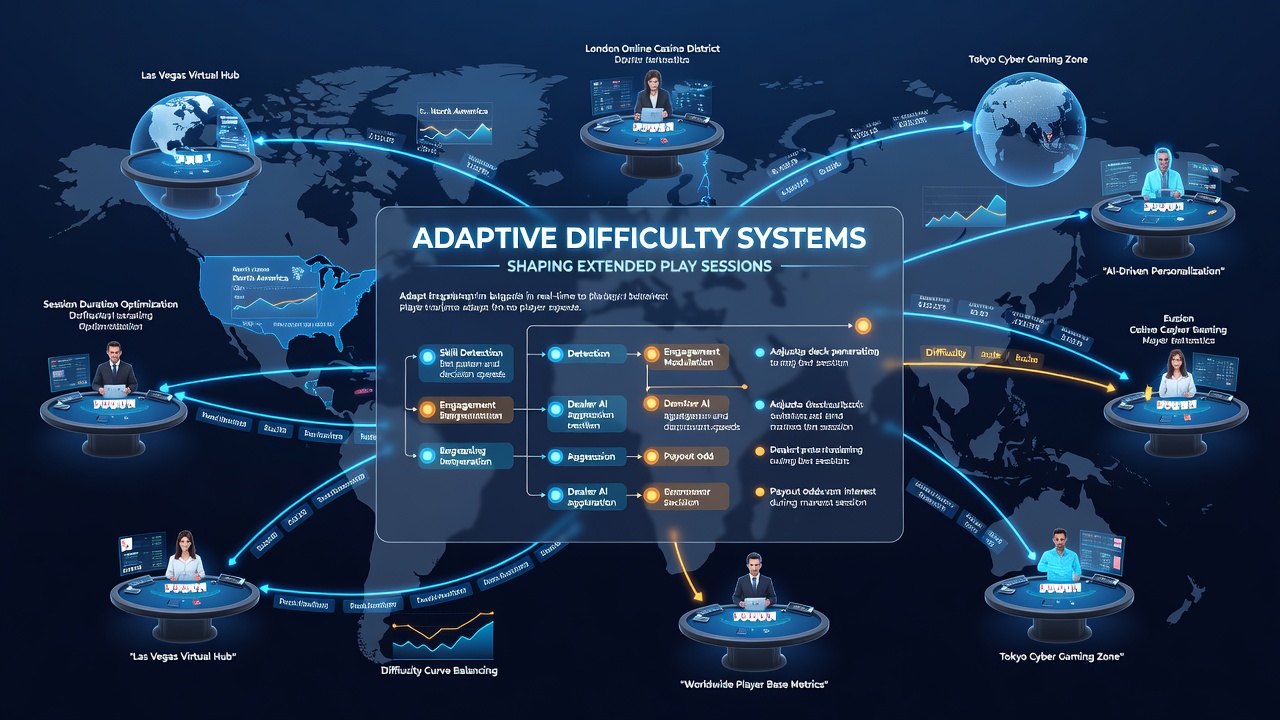
Industry associations such as the European Gaming and Betting Association have documented how these adjustments influence average revenue per user, noting that operators who fine-tune parameters every 10 to 15 hands achieve steadier engagement curves. Meanwhile, academic analyses from the University of Nevada's gaming research center highlight measurable differences in time-on-device between adaptive and non-adaptive environments, with the former extending participation by measurable margins across demographic segments. As of August 2026, several platforms reported that adaptive features contributed to a 12 to 15 percent lift in daily active users for blackjack specifically, though overall gaming revenue growth remained tied to broader market conditions.
Regulatory Oversight and Technical Safeguards
Regulators require independent audits of adaptive algorithms to confirm that adjustments stay within certified random number generator parameters and do not constitute deceptive practices, and licensing bodies in multiple regions mandate disclosure of core mechanics to players. Technical standards specify that difficulty shifts must remain transparent in aggregate reporting even if individual changes stay hidden from the interface. Observers note that platforms which publish regular fairness attestations experience fewer disputes, while those slow to document changes face increased scrutiny during renewal cycles. Data sharing agreements between operators and oversight agencies have expanded since 2024, enabling cross-border comparisons of how adaptive tools affect play patterns in different cultural and economic contexts.
Case examples include a major European platform that adjusted its model after regulatory feedback on session length caps, and an Asian operator that integrated biometric indicators to further personalize difficulty without violating local data privacy rules. These examples illustrate how technical teams balance retention objectives against compliance demands, resulting in systems that evolve through iterative testing rather than one-time deployments.
Conclusion
Adaptive difficulty continues to reshape virtual blackjack environments by aligning game responses with individual player trajectories, and available metrics from August 2026 onward demonstrate sustained impacts on session duration across global markets. Continued refinement through regulatory collaboration and performance monitoring will determine how these systems develop in coming years, particularly as new jurisdictions evaluate their integration into licensed offerings.