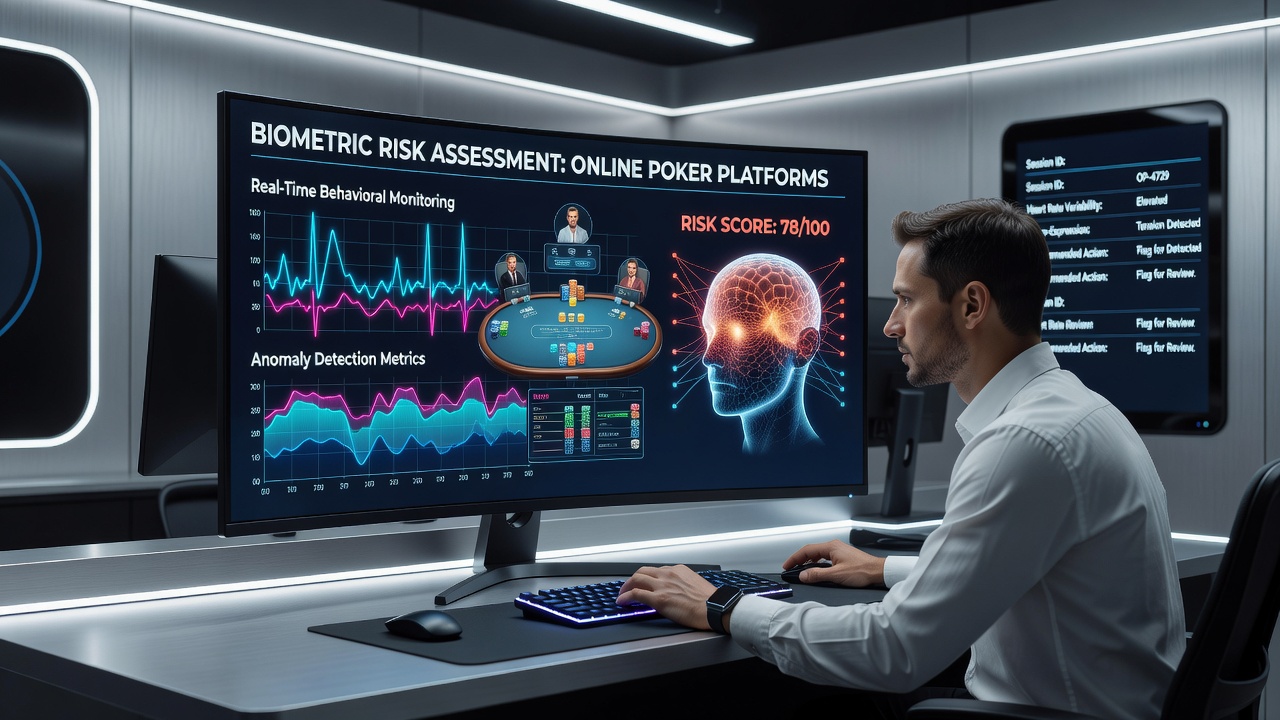
Examining Biometric Data Usage in Online Poker Platforms for Real-Time Behavioral Risk Assessment
Online poker platforms have incorporated biometric monitoring systems that track physical and behavioral signals to flag potential risk patterns as games unfold, and these tools combine data streams from webcams, device sensors, and interaction logs to build profiles that update continuously during sessions. Researchers note that such systems aim to identify indicators like elevated stress responses or irregular decision speeds that might point toward problem gambling behaviors or suspicious activity, while the approach relies on algorithms trained on large datasets collected from voluntary participant pools and anonymized historical play records.
Core Technologies Driving Real-Time Analysis
Biometric tools in this space often start with facial recognition and micro-expression detection that capture subtle changes in player expressions through standard device cameras, yet they extend further into keystroke dynamics which measure typing rhythms and mouse movement patterns that reveal hesitation or overconfidence during betting rounds. Heart rate variability comes into play when platforms partner with wearable device APIs, allowing voluntary integration of pulse data that correlates with emotional spikes during critical hands, and eye-tracking software adds another layer by recording where attention lingers on the screen, such as prolonged focus on certain bet sizes or opponent avatars. These elements feed into machine learning models that process information in milliseconds, producing risk scores that operators can review without interrupting gameplay, and the systems adjust thresholds based on individual baseline data gathered from initial sessions.
Integration Patterns Across Major Networks
Platforms operating across multiple jurisdictions have rolled out these features at different paces, with some requiring opt-in consent forms that detail data collection practices before activation, while others embed the monitoring into standard account verification steps. One study from the University of Nevada's International Gaming Institute revealed that early adopters saw measurable shifts in session lengths among flagged accounts, though the report emphasized correlation rather than direct causation. Data from these deployments shows that behavioral signals often cluster around specific game types, such as high-stakes no-limit hold'em where decision complexity increases the volume of measurable inputs.
Applications in Behavioral Risk Detection
Real-time assessment focuses on deviations from established player norms, for instance when a participant who typically folds marginal hands suddenly shows accelerated heart rate patterns alongside rapid all-in decisions, and the software cross-references these against aggregated profiles from similar skill-level users. Platforms use this information to trigger graduated responses that range from subtle interface adjustments, like displaying responsible gaming prompts, to more direct interventions such as temporary session pauses or account manager outreach. Observers note that the approach differs from traditional post-session reviews because it operates while play continues, allowing operators to address potential issues before they escalate into larger financial or regulatory concerns.

Regulatory frameworks have begun addressing these capabilities more directly, and in June 2026 several North American and European licensing bodies convened to discuss standardized reporting requirements for biometric datasets used in player protection programs. The Nevada Gaming Control Board published updated compliance guidelines that require operators to maintain audit trails for any algorithmic decisions affecting account access, while similar discussions in other regions emphasize data minimization principles to limit collection to what is strictly necessary for risk scoring.
Challenges and Technical Limitations
Accuracy remains a key consideration because biometric signals can vary due to external factors like lighting conditions, device quality, or even player fatigue unrelated to gambling behavior, and false positives may lead to unnecessary interventions that frustrate legitimate users. Privacy regulations in multiple jurisdictions impose strict consent and deletion protocols, requiring platforms to provide clear mechanisms for users to revoke access to their biometric profiles at any time. Technical teams continue refining models through ongoing validation against diverse demographic samples, since initial training data sometimes underrepresents certain age groups or geographic regions.
Industry Adoption Trends
Adoption has accelerated among networks that already maintain sophisticated player tracking infrastructure, and several operators have reported integrating biometric layers with existing loyalty systems to create unified risk dashboards. Figures from industry reports indicate that platforms handling multi-state traffic show higher implementation rates, partly because these networks face overlapping regulatory expectations around responsible gaming tools. Collaboration between software providers and academic researchers has produced open datasets that help standardize measurement approaches across different poker formats.
Future Directions in Data Handling
Developments in edge computing allow more processing to occur locally on user devices, which reduces the amount of raw biometric information transmitted to central servers and addresses some latency and privacy concerns simultaneously. Experts anticipate further integration with artificial intelligence systems that can predict risk escalation several hands in advance, based on cumulative signal patterns rather than isolated spikes. Continued refinement depends on transparent reporting from operators and feedback loops involving regulatory oversight bodies that evaluate both effectiveness and user impact over time.
Conclusion
Biometric monitoring in online poker represents an evolving intersection of technology and player protection protocols, where real-time data streams support proactive identification of behavioral risks without replacing human oversight entirely. As platforms refine these systems and regulators establish clearer parameters, the focus remains on balancing detection capabilities with consent requirements and technical safeguards that maintain trust across the ecosystem.