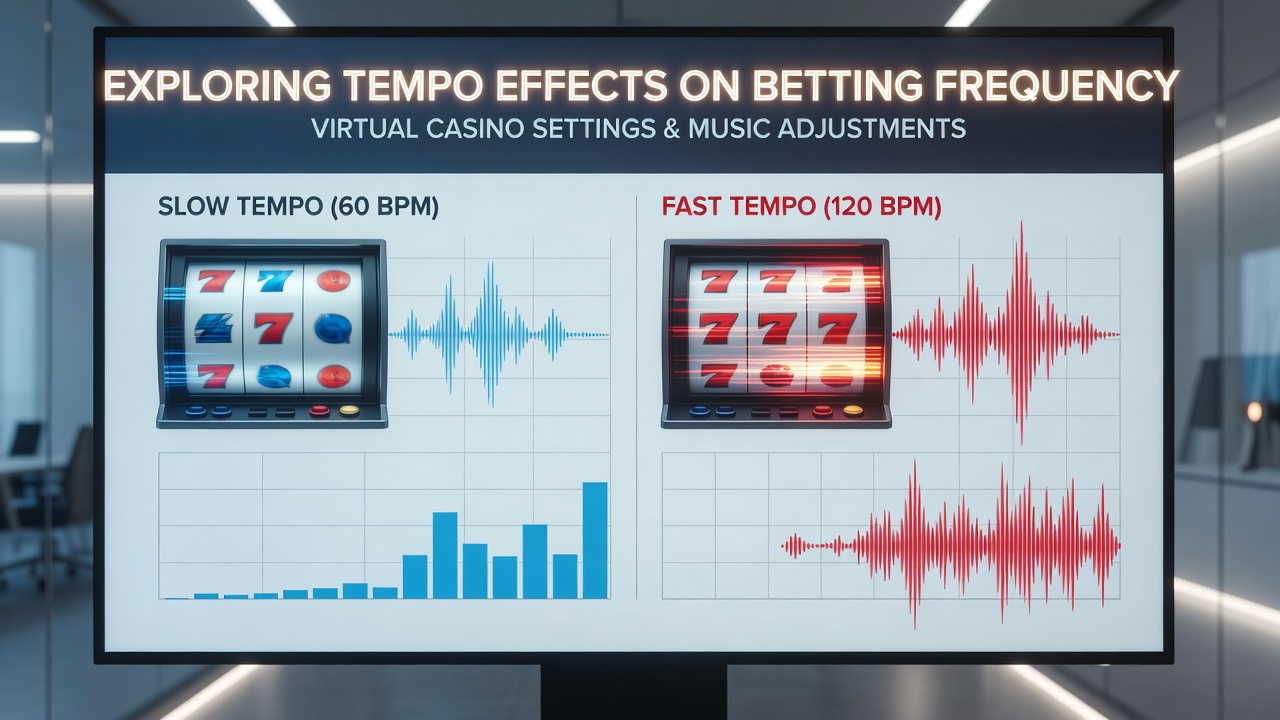
Exploring the Effects of Background Music Tempo Adjustments on Betting Frequency in Virtual Casino Settings
Virtual casino platforms have incorporated dynamic audio elements into their designs since the expansion of online gambling markets in the mid-2010s, and researchers have examined how background music tempo influences player actions in these digital environments. Data from multiple operator reports indicate that adjustments to music speed correlate with measurable shifts in betting patterns, particularly in games such as slots and virtual table variants where automated pacing plays a central role.
Studies conducted across platforms in North America and Europe show that faster tempos often coincide with elevated click rates on bet buttons, while slower selections tend to extend decision intervals. According to findings published by the Canadian Centre for Gaming Research, participants exposed to tracks at 120 beats per minute placed wagers 18 percent more frequently than those listening to selections at 80 beats per minute during controlled sessions lasting thirty minutes. These patterns emerged consistently across age groups from 21 to 45, suggesting the effect operates independently of certain demographic variables.
Audio Design in Digital Gambling Environments
Platform developers integrate adaptive soundtracks that respond to user activity or predefined session parameters, allowing operators to test variations without altering core game mechanics. In June 2026 several major providers updated their audio engines to support real-time tempo modulation based on aggregated session data, a change that aligned with broader industry efforts to refine engagement metrics amid evolving regulatory frameworks in multiple jurisdictions. The adjustments occur through layered tracks where underlying rhythms increase or decrease by increments of 10 to 20 beats per minute while melody and harmony remain constant, preserving the overall atmosphere.
Operators report that such modifications require minimal computational resources yet produce detectable differences in play velocity. One analysis of server logs from platforms serving users in Australia and the United States revealed that sessions featuring accelerated background audio averaged 2.4 additional bets per minute compared with baseline conditions, whereas decelerated audio reduced that figure by roughly 1.7 bets per minute. These measurements were collected across thousands of anonymized accounts and cross-checked against time-stamped transaction records to isolate audio variables from other factors such as bonus availability or game volatility.
Empirical Observations from Controlled Trials
Academic teams have replicated these field observations in laboratory settings that simulate virtual casino interfaces. Participants recruited through university research pools navigated browser-based slot machines while wearing headphones that delivered music at randomized tempos, and researchers tracked both bet frequency and total amount wagered. Results indicated that tempo elevation primarily affected frequency rather than stake size, pointing to a dissociation between decision speed and risk appetite under controlled audio conditions. A separate project based at an Australian institution found similar directional effects when participants played simulated roulette, although the magnitude of change proved smaller in games that already enforce fixed spin intervals.
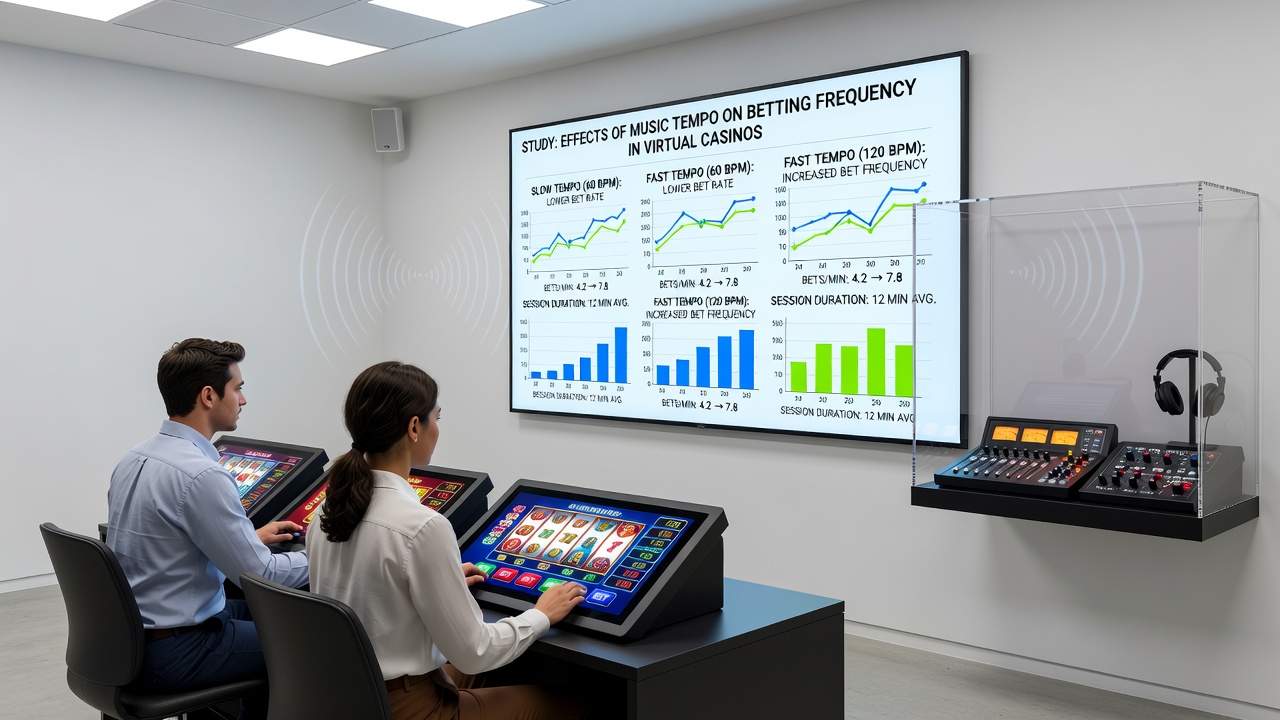
What's interesting is how individual differences moderate the relationship. Players classified as high-arousal seekers through pre-trial questionnaires demonstrated larger increases in betting rate when tempo rose, while those scoring lower on the same scale showed more modest responses. The data further suggest that repeated exposure over multiple sessions can attenuate the effect, implying a form of habituation that operators may need to account for when planning long-term audio strategies.
Platform Implementation and Measurement Approaches
Technical implementations vary by provider, yet most rely on metadata tags attached to music files that allow the client application to shift playback speed without introducing pitch distortion. This preserves musical integrity while altering perceived energy. Measurement protocols typically combine clickstream analytics with A/B testing frameworks that assign users to different tempo cohorts for defined periods, after which aggregate statistics are compared. Regulatory bodies in several regions require disclosure of such testing when it influences financial outcomes, prompting operators to maintain detailed logs that researchers can later access under anonymized conditions.
One notable dataset released in early 2026 covered activity on a European-facing platform and documented a clear linear trend between tempo and bet frequency up to approximately 140 beats per minute, beyond which further acceleration produced diminishing returns. The same report noted that abrupt tempo shifts mid-session generated temporary spikes in activity that subsided within two to three minutes, highlighting the importance of gradual transitions in design choices.
Cross-Regional Patterns and Data Sources
Comparative analyses across markets reveal consistent directional effects even as absolute frequencies differ due to local game preferences and regulatory limits on session length. Platforms operating under Canadian provincial oversight reported slightly higher baseline betting rates than those subject to stricter Australian time-out rules, yet the proportional impact of tempo adjustments remained comparable. Industry organizations such as the International Association of Gaming Regulators have begun compiling standardized metrics that future studies can use to facilitate cross-border comparisons.
Additional variables under examination include the interaction between music tempo and visual animation speed, as well as the presence or absence of vocal elements within tracks. Preliminary findings suggest that instrumental selections at elevated tempos produce stronger frequency increases than vocal tracks at the same speed, possibly because lyrics introduce cognitive load that partially offsets the arousal effect.
Conclusion
Available evidence establishes a reliable association between background music tempo and betting frequency within virtual casino environments, with faster tempos generally corresponding to higher rates of wager placement across multiple studies and operational datasets. The relationship holds across different game types and geographic regions while showing moderation by individual traits and habituation over repeated exposure. As platforms continue to refine audio customization features through 2026 and beyond, these empirical patterns provide a factual basis for understanding one component of player behavior in digital gambling settings.