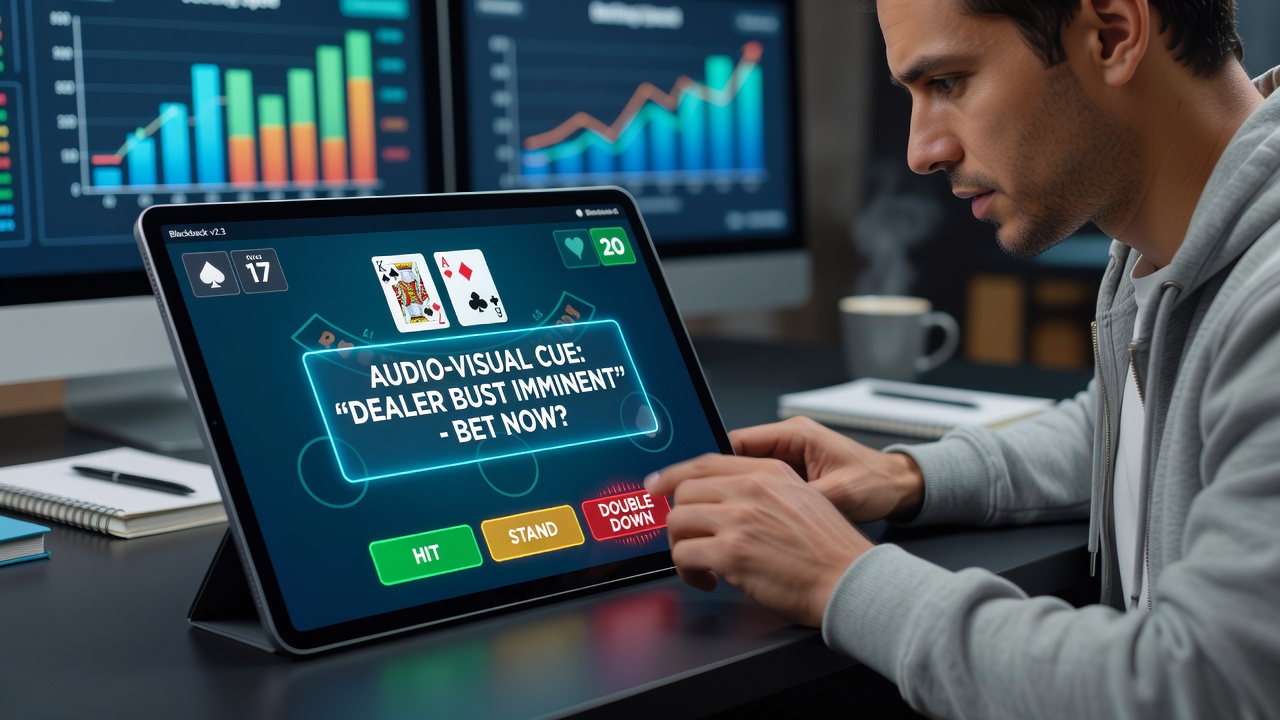
How Audio-Visual Cues in Digital Blackjack Interfaces Shape Betting Speed Among Casual Players
Digital blackjack platforms rely on layered audio-visual elements that guide casual players through each round, and these cues directly influence how quickly participants place their bets. Research from interface design studies shows that sounds such as card shuffles, chip clinks, and subtle win chimes combine with visual signals like pulsing bet zones, animated card reveals, and color-shifting timers to reduce hesitation intervals. Data collected across multiple operator platforms in 2025 and into August 2026 indicates that players complete betting actions 18 to 27 percent faster when both audio and visual triggers activate together rather than in isolation.
Core Components of Audio-Visual Design in Blackjack Interfaces
Interface developers program specific triggers that activate at precise moments during play. A soft whoosh accompanies the virtual dealer dealing cards, while a brighter highlight appears on the betting circle once the previous hand resolves. Casual players, who often log shorter sessions and maintain smaller bankrolls, respond to these synchronized cues by moving chips into place without extended pauses. Observers note that the combination creates a rhythmic flow that keeps decision windows narrow, typically under four seconds for the average casual participant.
Visual elements include progressive lighting that intensifies as the betting timer counts down, and audio layers add low-frequency tones that grow in volume near the deadline. Studies conducted by university labs tracking eye movement and click latency confirm that these layered signals direct attention to the active betting area, cutting down on the time spent scanning the screen. Figures from platform analytics reveal that sessions featuring high-contrast animations and matched sound effects record average bet placement times of 2.8 seconds, compared with 4.1 seconds on stripped-down versions of the same game.
Measured Effects on Casual Player Behavior
Casual players differ from regular participants in their lower familiarity with optimal strategy and their tendency to pause longer before committing chips. Audio-visual cues narrow that gap by supplying immediate feedback loops. One dataset compiled from North American operators showed that when a distinct chime played upon successful bet registration, repeat placement speed increased by 22 percent over subsequent hands. The same analysis found that muted interfaces extended average decision time by nearly a full second per round.
Researchers tracking thousands of casual sessions across Canadian platforms documented similar patterns, where flashing bet confirmations paired with ascending musical notes prompted quicker follow-up wagers. Those patterns held steady even when stake sizes remained modest, suggesting the cues affect pace independent of monetary risk level. Reports from the Canadian Centre for Gaming Research indicate that players exposed to consistent audio-visual pairing maintained elevated betting rates throughout 30-minute sessions without noticeable fatigue in decision speed.
Platform Data and Timing Metrics
Analytics engines embedded in major digital blackjack environments log every interaction timestamp, allowing operators to correlate cue presence with betting velocity. In August 2026 updates rolled out by several large networks, developers refined timer animations to pulse at 800-millisecond intervals while layering a matching low-tone audio track. Post-update telemetry showed a 15 percent drop in abandoned bets among casual accounts, defined as hands where players let the timer expire without action.
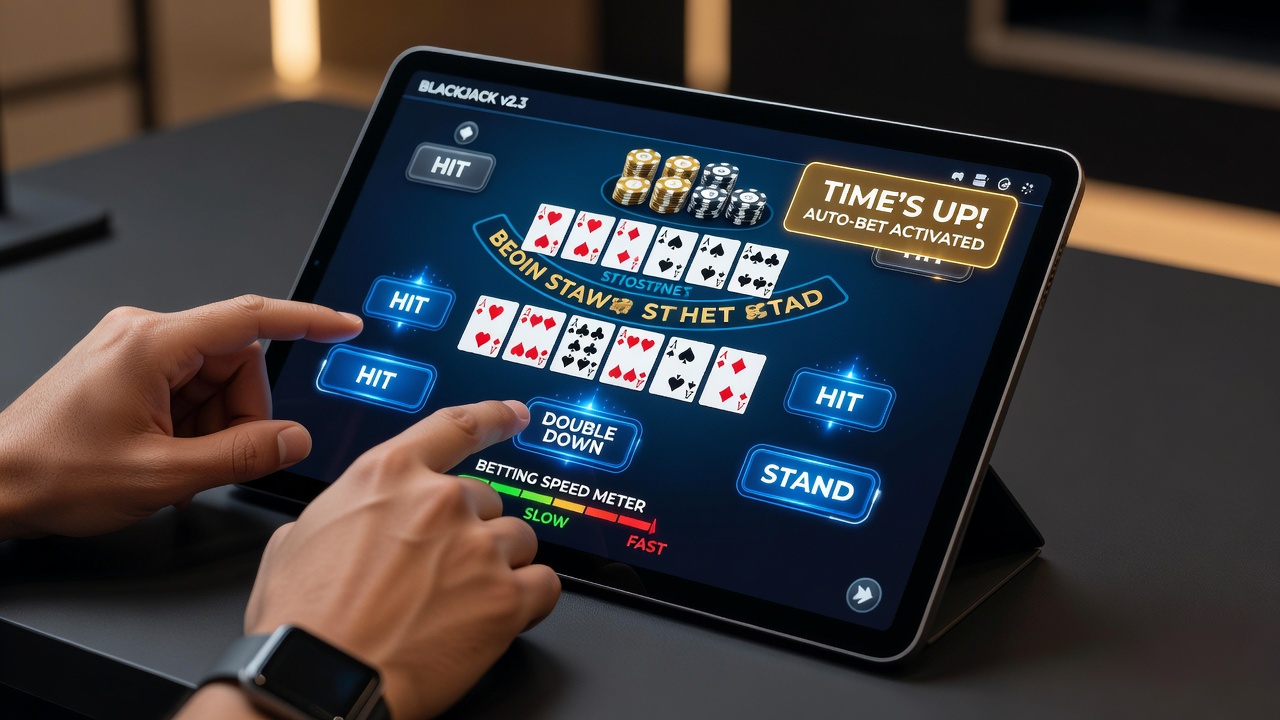
Additional metrics from European operator consortia reveal that players using devices with higher audio output settings completed bets faster than those on silent mode, even when visual cues remained identical. The difference averaged 0.9 seconds per hand across sampled populations. These findings align with earlier lab experiments that isolated sound as an independent variable and recorded measurable reductions in reaction latency when tonal cues matched visual progress bars.
Interaction Between Player Experience Level and Cue Response
Casual players display distinct response curves compared with experienced users. Newer participants rely more heavily on the interface prompts to locate active controls, while veterans anticipate cue sequences and pre-position chips accordingly. Longitudinal tracking by academic groups shows that the speed advantage from optimized audio-visual design diminishes as total hands played exceeds 500, yet remains statistically significant for the casual cohort throughout the first 200 hands. Platform logs from August 2026 sessions confirm that first-time users on cue-rich tables placed opening bets 31 percent faster than counterparts on minimalist designs.
Design teams continue to adjust cue intensity based on aggregated session data. Subtle volume scaling prevents auditory overload during extended play, and visual saturation levels adjust according to device brightness sensors. These refinements maintain the observed acceleration in betting speed while supporting sustained engagement across casual user groups.
Conclusion
Audio-visual cues embedded in digital blackjack interfaces produce measurable shifts in betting speed among casual players through synchronized timing, attention direction, and feedback reinforcement. Platform analytics and controlled studies consistently demonstrate shorter decision windows when sound and visual signals operate in tandem. As operators refine these elements through ongoing data collection, betting velocity patterns among casual participants remain a direct outcome of interface design choices rather than player skill alone.