
How Neural Mapping Tools Reshape Live Dealer Interactions in Virtual Casino Environments Worldwide
Neural mapping tools have entered virtual casino operations through wearable sensors and software that track brain activity patterns during live dealer sessions, allowing platforms to adjust game pacing and dealer responses based on measurable neural signals rather than traditional observation alone. These systems combine electroencephalography with machine learning models to interpret engagement levels, stress indicators, and decision-making rhythms in real time. Operators in multiple regions began testing scaled versions of this technology in early 2025, with broader rollouts accelerating through mid-2026.
Core Components of Neural Mapping Systems
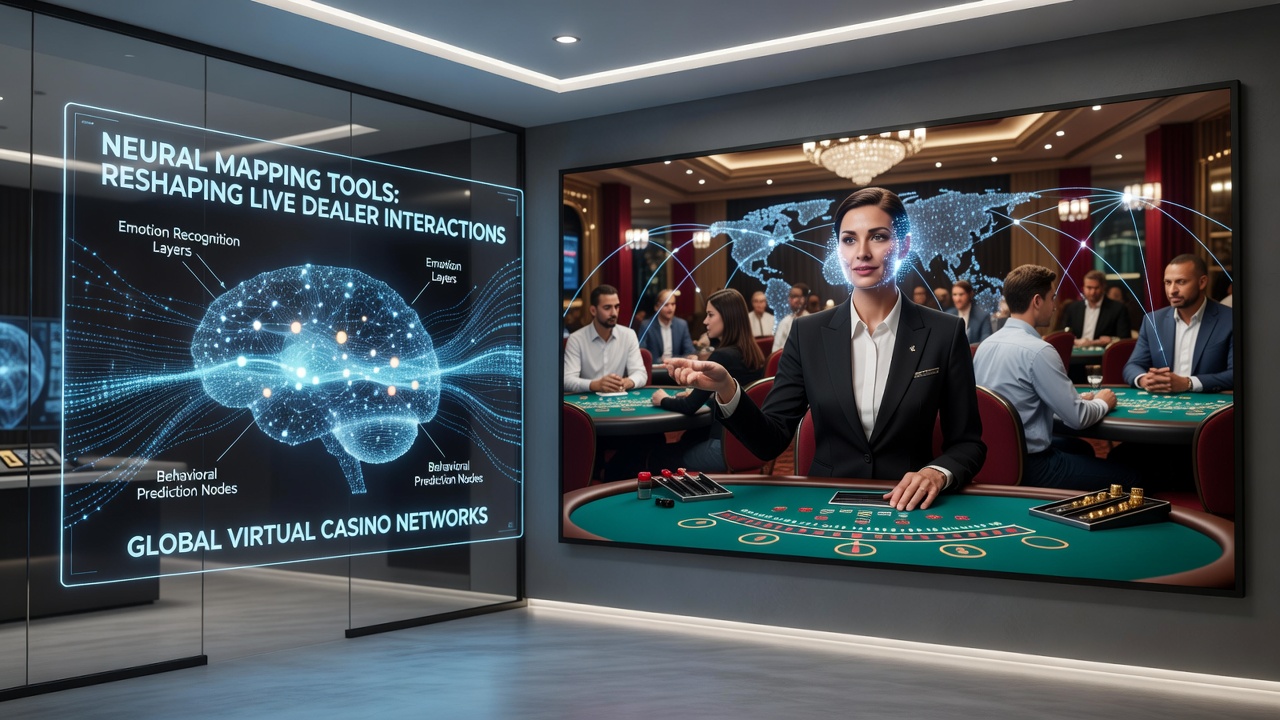
Modern neural mapping setups rely on lightweight headbands or earpiece sensors that record electrical activity across key brain regions while players interact with live dealers through video streams. Data processing occurs on edge servers that translate raw signals into categories such as heightened focus, hesitation, or emotional arousal. Live dealer software then receives these categorized outputs and can trigger subtle changes, including adjusted card dealing speeds or dealer script variations. Several European operators integrated these tools into roulette and baccarat tables during 2025 pilot programs, reporting measurable shifts in session duration metrics.
Hardware providers supply standardized APIs that connect directly to existing streaming platforms, while custom algorithms handle regional regulatory constraints on data collection. In August 2026, updates from Canadian provincial gaming authorities clarified data storage requirements for neural signals, prompting several platforms to adopt on-device processing to limit transmission of raw biometric information.
Changes to Live Dealer Dynamics
Dealers working in virtual environments now receive aggregated neural feedback dashboards that highlight collective player states without exposing individual identities. This allows them to modify tone, pace, or table announcements in response to detected patterns across groups of participants. One major platform operating across multiple Asian markets implemented a system where dealers receive color-coded prompts on their interfaces when average engagement signals drop below certain thresholds during extended sessions.
Player-side interactions also evolve as interfaces adapt to individual neural profiles over time. Systems can detect when a participant shows repeated hesitation before placing bets and may offer simplified decision prompts or extended time windows before the next round begins. Research from academic institutions tracking these implementations indicates that such adjustments correlate with changes in average bet frequency and voluntary session extensions across tested user groups.
Regional Implementation Patterns
Adoption rates vary significantly by jurisdiction. Australian operators have focused on voluntary opt-in programs where players consent to neural monitoring in exchange for personalized game recommendations, while certain U.S. state-licensed platforms emphasize anonymized aggregate data only. A report from the National Council on Problem Gambling outlines how several interstate compacts are examining shared standards for biometric data handling in live dealer environments.
European markets show faster integration in jurisdictions with established online frameworks, where operators link neural mapping outputs to responsible gaming tools that can initiate cooling-off periods based on detected fatigue signals. Data from industry tracking services reveal that platforms using these combined systems recorded shifts in player retention figures during the first half of 2026 compared with traditional live dealer setups.
Technical Integration Challenges
Latency remains a primary concern because neural data streams must process quickly enough to influence live interactions without disrupting video synchronization. Engineers address this through hybrid models that perform initial signal classification locally before sending summarized outputs to central servers. Cross-platform compatibility also requires ongoing coordination between sensor manufacturers and casino software developers, particularly when supporting multiple device types across global user bases.
Security protocols have tightened around neural datasets, with encryption standards evolving to treat brain activity readings as sensitive personal information equivalent to financial records. Industry groups such as the European Gaming and Betting Association have published guidelines encouraging regular third-party audits of these systems.
Future Trajectory Through Late 2026
Continued refinement of machine learning models trained on larger neural datasets is expected to improve prediction accuracy for player responses during specific game types. Partnerships between academic researchers and platform operators are generating peer-reviewed studies that examine long-term effects on decision patterns in live dealer settings. As more jurisdictions finalize rules around biometric integration, the scope of neural mapping applications in virtual casinos will likely expand to include additional table games and tournament formats.
Conclusion
Neural mapping tools continue to modify how live dealers and players connect within virtual casino environments by supplying real-time physiological context to streaming interactions. Global operators have adapted these systems at different rates depending on regulatory environments and technical infrastructure, with measurable effects appearing in session metrics and interface adjustments. Ongoing developments through the remainder of 2026 will depend on further standardization efforts and expanded research into the technology's operational boundaries.